

The Ranger Finance ICO on MetaDAO raised $8 million against $86 million in committed capital, a 10.7x oversubscription by funds accepted. But the headline numbers only tell part of the story. 01Resolved analyzed the participation data and found important nuances about capital concentration, incentive alignment, and repeat investor behavior that shape how the $RNGR token enters the market.
ICO Overview
01Resolved analyzed the Ranger Finance ICO and wanted to share some insights with the community.
- Funds contributed: $86,398,012
- Wallets contributing funds: 8,761
- Funds accepted: $8,000,000
- Minimum raise: $6,000,000
- Oversubscription: 10.7x funds accepted, 14.4x minimum raise
While overall demand was extremely strong, the distribution of that demand reveals important nuances about capital concentration and incentive alignment.
Finding 1: The Power Law of Participation
Capital participation in the Ranger Finance ICO followed a clear power-law distribution: a very small number of wallets accounted for a disproportionate share of total committed funds.
| Cohort | Share of Participants | Share of Total Capital |
|---|---|---|
| Top 10 wallets | 0.11% | 18.1% |
| Top 50 wallets | 0.57% | 42.7% |
| Top 500 wallets | 5.71% | 79.3% |
The top 50 wallets, representing just 0.57% of all participants, contributed $36.9 million or 42.7% of the total raise.
This pattern is typical of unbounded public sales and is compounded when external incentives attract whales. While thousands of wallets participated, a small cohort of whales effectively shaped the capital profile of the ICO.
Finding 2: Smaller Investors Show Broad but Shallow Support
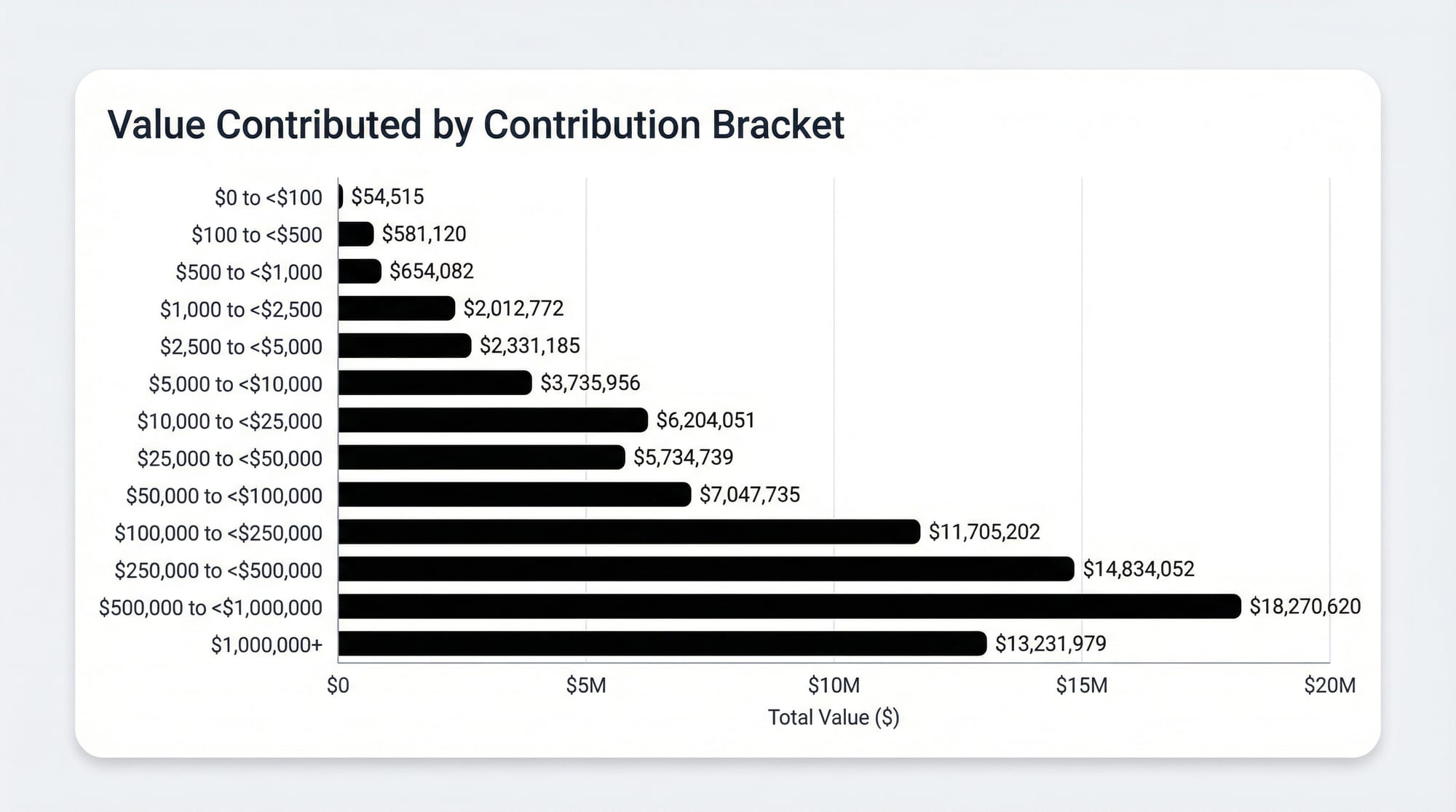
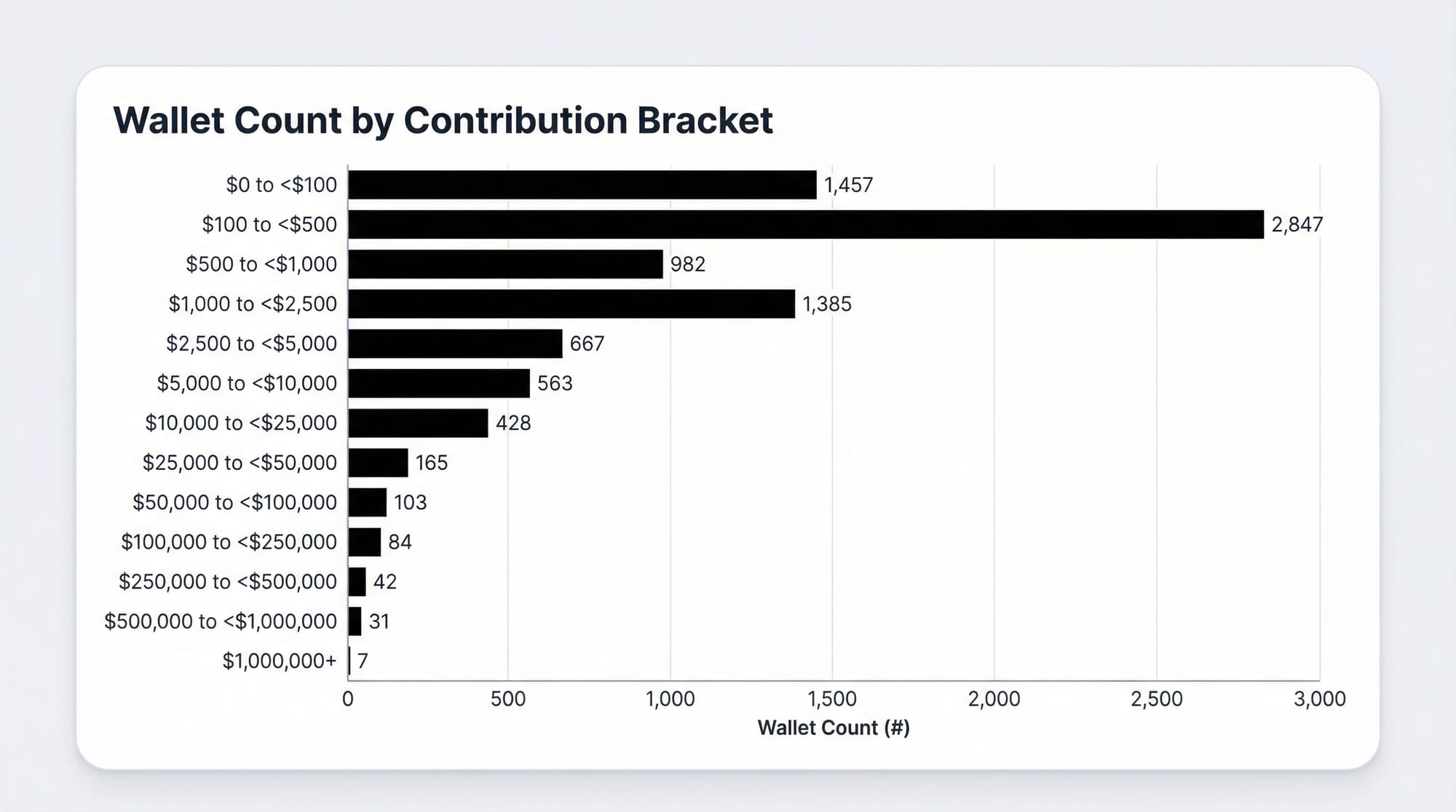
While whales dominated the capital landscape, the foundation of the Ranger Finance ICO was built on a broad base of small capital allocators. This demonstrates widespread community interest, even if contribution per individual was relatively small.
Nearly half of all participants (49.1%) contributed less than $500. However, their combined contributions accounted for less than 1% of the total funds raised.
While the ICO had a large number of supporters, the financial health of the $RNGR token post-ICO is highly dependent on its largest contributors. As per the data, 2,847 wallets contributed between $100 and $500, amounting to a total contribution of $581,120 from this bracket. On the opposite end of the spectrum, 7 wallets contributed over $1,000,000 to the ICO, and the total contribution from the +$1,000,000 bracket was $13,231,979.
A Note on External Incentives
Community feedback raised concerns that some late-stage whale participation may have been driven by external incentives rather than long-term alignment with the $RNGR token.
Specifically, critics pointed to potential interaction with a Ranger Finance market on Polymarket:
- Whales establish a position on Polymarket they believe they can profit from
- Whales deploy capital into the ICO late in the sale window to match their Polymarket bet
- Whales dump project tokens post-ICO, while profiting from the Polymarket bet
We have not independently verified this behavior. However, the existence of such incentives is important to acknowledge, as it introduces external forces that may impact post-ICO token dynamics independent of project fundamentals.
Finding 3: Repeat Participants
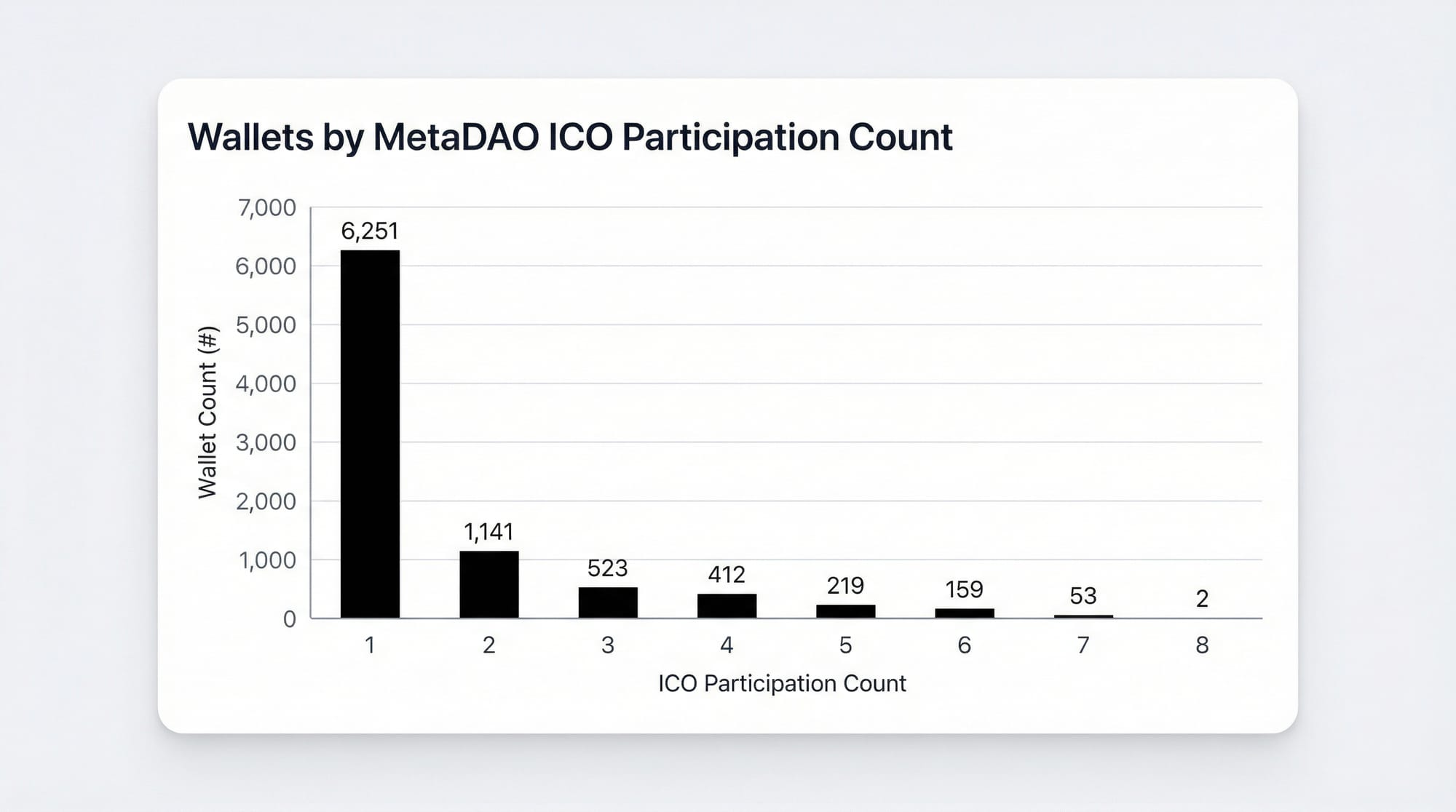
01Resolved also analyzed whether participants were new to MetaDAO ICOs or repeat contributors.
While 71% of wallets participated in only the Ranger Finance ICO (contributing 53% of total value), the remaining 29% of "repeat participants" contributed nearly half (47%) of the total value, and more than double the average contribution value.
To project founders, this shows the ability of MetaDAO to both attract new investors and the value of having built a strong community of investors who believe in the concept of ownership coins at large.
Conclusion
What makes the Ranger Finance sale notable is the structure of demand beneath the headline numbers. Capital concentration, repeat investor behavior, and potential external incentives such as prediction markets all shape post-ICO dynamics in ways that raw fundraising totals cannot capture. For project founders, traders, and analysts, this underscores a key takeaway: evaluating an ICO requires understanding who supplied the capital, when they participated, and why they were economically motivated, not just how much was raised. 01Resolved exists to surface these nuances, turning participation data into insight for the ownership coin ecosystem.